Wednesday, August 15, 2018

Images of Kenya: The Culture

The best way to explain Kenyan culture is through snapshots.  There was much we had to learn about living in this culture, and much we loved about it.


church services in the village are long, 
usually several hours, and singing is a 
jubilant experience and is usually 
combined with dancing


singing and dancing at church


offerings include money as well as other items
like produce from the shambas (farms),
or even livestock like this chicken


the Bible and this hymnbook are some 
of the few texts written in the 
local Kipsigis language around Tenwek


an outhouse - this is a very nice one


an inside view of the "squatty potty"


rice at a celebration


rice can be cooked in huge quantities
so it's perfect for large gatherings


beans and rice (and pototoes) at a funeral


this funeral was a joyous event, 
evidenced by this dancing trio,
celebrating a long life well lived


there's always room for everyone on the road 
(or so it's thought)


motorcycles are called piki pikis or boda bodas
and they are everywhere - the cheapest and 
most dangerous mode of transportation


no load is too big for any vehicle...


...even for piki pikis


I cannot tell you how common 
it is to see things like this.


handwashing before a meal at someone's home


Kenyan fast food - roasted corn 
on the side of the road


in the rainy season it's important to put your 
laundry on the line before the rain clouds roll in


children gathered after a church service - 
a great time for fellowship


Chai is an extremely important aspect of Kenyan culture.
Many Kenyans drink chai in the morning, mid-morning, 
lunch, mid-afternoon, and again in the evening.  
The hospital nearly comes to a halt when it's chai time 
in the morning.  It's a chance to take a break and visit 
with each other.  We always had a chai break 
at home with our househelpers too.


Kenyan children typically begin drinking chai 
when they're two years old.  Asa reached that 
milestone while we were there and enjoyed 
his first cup of chai with our househelper.
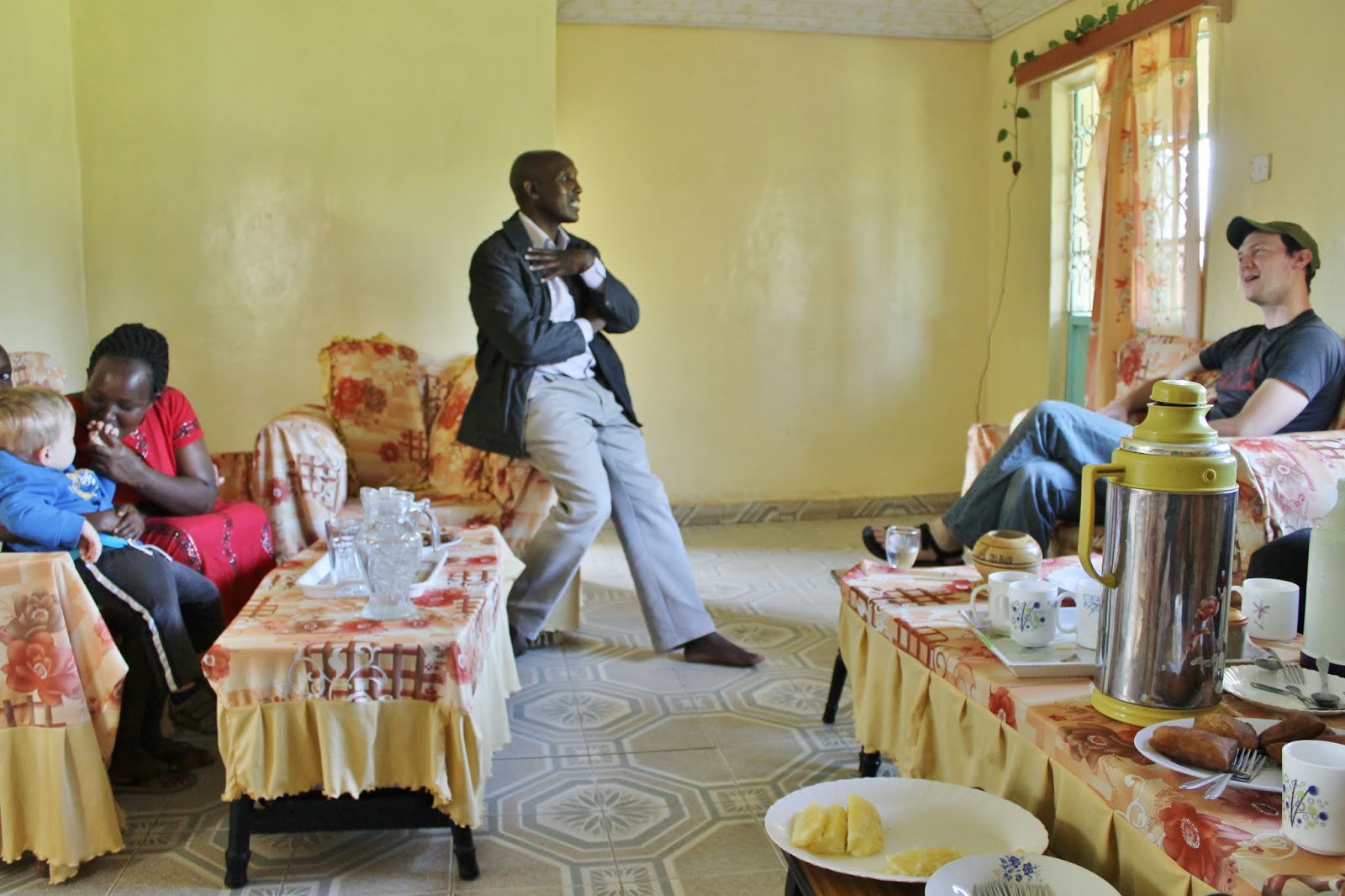

Visiting friends in their homes is a huge honor, 
and they typically prepare a wonderful meal 
(including chai, of course) for your visit.  It usually 
takes hours to visit someone in their home because 
when you're visiting with friends there is 
nowhere else you need to be!


children are responsible for chores at a young age - 
these boys are in charge of watching the family's cattle


many people have big rain barrels (the black tank 
to the left) for acquiring drinking water 
as well as avoiding hauling water from the river


honoring people with gifts is a common part of 
saying goodbye - this Maasai blanket, the apron 
and the bag were gifts given to us by the Family 
Medicine residents as we prepared to leave Tenwek


"football" is the most popular 
sport in Kenya (of course!)


Tuesday, July 24, 2018

Images of Kenya: The People

Because I have so many photos to share, and because they give a literal picture of Kenya that speaks louder than words, the next few posts will be nothing but photos.  This post will focus on the people of Kenya, who are as beautiful and diverse as the landscapes are.


a Maasai man with his cattle on the savannah


a mother and son bring an offering 
during a Sunday morning church service


how babies are carried by their mothers


children gathered in the church yard


a worker at a children's home making chapatis


mothers singing and dancing at a celebration 
for their sons who were recently circumcised


a typical donkey cart along the road


men on a dhow at the coast, 
at the Indian Ocean


waiting for tourists to want a camel ride on the beach


taking a much-deserved break from plowing by hand,
getting ready for rainy season


choir performs at a funeral


playing in the tea fields at the family shamba (farm)


worshiping at church


househelpers in our community


teacher at a children's home, 
teaching Swahili words


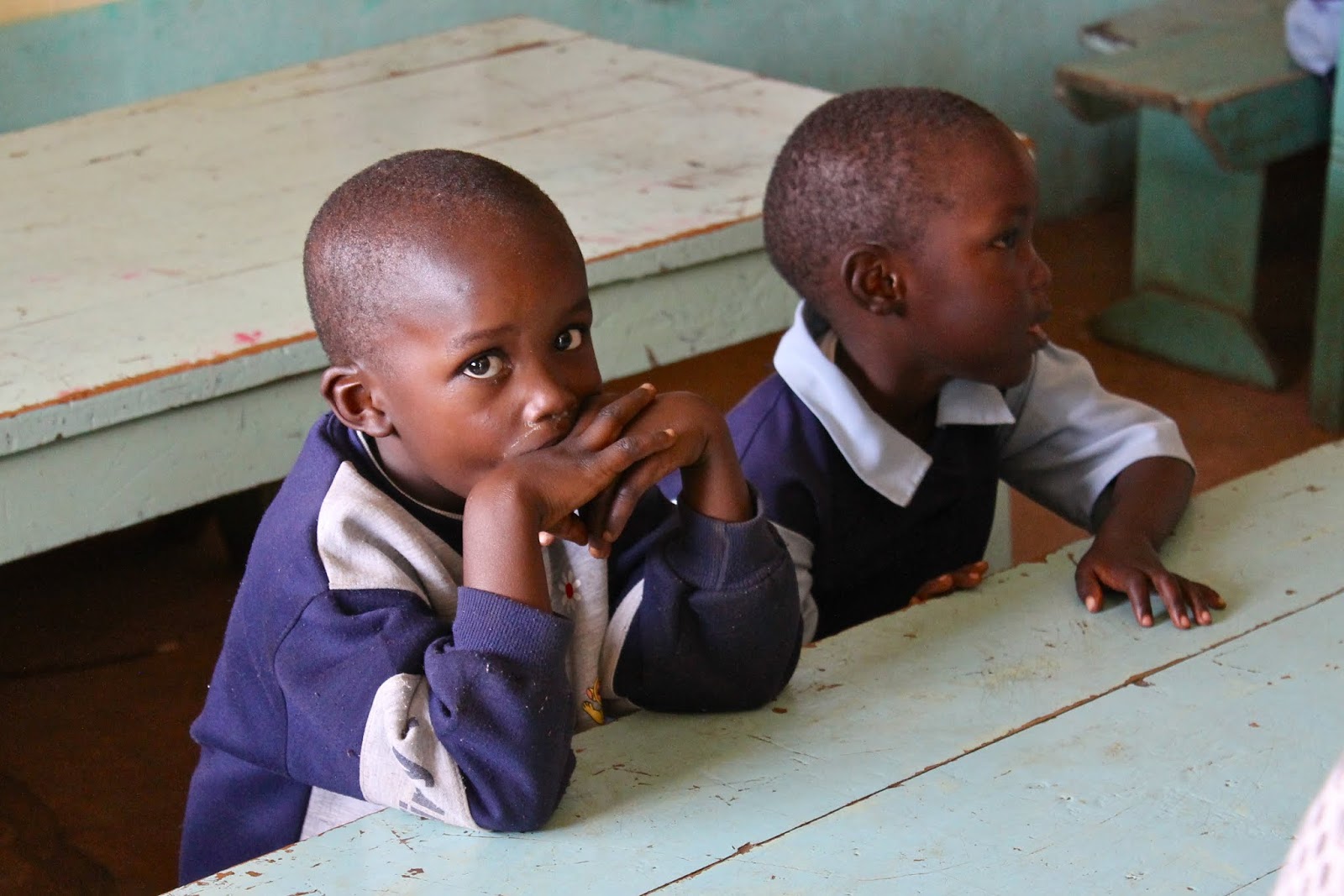
in primary school


selling vegetables along the roadside


workers picking tea in the fields


plowing the fields


wearing their Sunday best


Monday, June 11, 2018

There and Back Again

In the movie version of The Hobbit, while trying to convince Bilbo Baggins that he should join the dwarves in their quest to the Lonely Mountain, Gandalf tells the hobbit this:

"You'll have a tale or two to tell of your own when you come back."

Bilbo pauses.  Then asks, "Can you promise that I will come back?"

With honesty, Gandalf replies, "No.  And if you do, you will not be the same."

You will not be the same.  A simple but powerful truth.  You will be changed after undertaking an adventure of this nature.  It was said with a particular adventure in mind - of returning to the dwarves' mountain home and reclaiming their ancestral treasure from the villainous dragon Smaug.  But it could also be said of your first sleepover as a kid, of going off to college, of getting married, of becoming a parent, of moving overseas to become a missionary. 

You will not be the same

Because after such an adventure, you will be stretched.  You will be humbled.  You will see the world with new lenses.  You will understand God in different ways.  You will understand yourself in different ways too.

And sometimes, after becoming not the same as before, you will journey home again and meet the past with the present head-on. 

Sometimes they are friends. 

Sometimes the past says to the present, "Welcome back!  You remember Cherry Coke?  It tastes just as good as you remember."  And the present takes a sip and says, "Mmm...  Yes, you are right.  How I've missed Cherry Coke!"  Or perhaps the present says to the past, "Did you know how contented I've been with just two hoodies for the past two years?"  And the past says, "How wonderful!  Perhaps we should get rid of all those extra hoodies in the bin downstairs that you're content without."  And they smile at one another and agree that life together is good.

But sometimes the past and the present are enemies and do battle against each other.

Sometimes the past says to the present, "Isn't it wonderful to have access to Amazon again and order anything you want anytime you want?"  And the present objects with the past, saying, "Well, yes, but you must know the freedom I felt not thinking of all the things I wanted and being content with what I had.  Stop talking about Amazon!"  Or perhaps the present complains to the past, "It's rather exhausting to run around again like I used to, in and out of the car all the time.  I think my new norm of staying home most of the time was much simpler."  And the past rebuffs the present with, "Listen to you!  You, who longed to get out of the house every day with those little rascals of yours!  But now you complain of the effort it takes.  Make up your mind, why don't you???"

The back-and-forth harmony and tension of the past and present is all because of this: we have gone on an adventure and returned not the same.  There and back again, but not the same as before.

No one says transitions are easy.  At the most, we can concede that some transitions are easier than others.  For us, we can say that this transition back to the States for Home Assignment has been easier than the transition to living in Africa.  But it is still a transition and has required many thoughts and emotions from us.

The truth is, we love America.  We love the smooth roads and easy meals and playgrounds and reliable wifi.  But the truth is, we miss Kenya.  We miss the routine and structure we had there, and the friends next door, and chai time, and help with homeschooling.

We love two places and have been shaped by two places.  And unlike Bilbo Baggins, we plan to go back and forth several times.  And undoubtedly we will be shaped even more by both places in the future.

But for now we wrestle with and embrace the transition from one place to the other and are processing how we are not the same.

And we have tales to tell of our own, just as Gandalf said.  Tales of the adventure itself and tales of our homecoming, and tales of the two intertwined. 

And we love to do the telling.  Thank you to everyone who has asked us about Kenya, especially when you ask how we are not the same because of it.


*  *  *  *  *  *  *  *  *  *


Here are some small tales from our beloved sons since returning:

Kai: "This is why America is so great: when you come to America you get Lucky Charms!"

Mama: "Who can tell me why it's so important to wear seat belts all the time in the car?"
Caleb: "Because if there's a cow in the middle of the road and we hit it, we could go flying."

Kai: "There are so many potties in America!"

Caleb: "Why are we going to bed already?  The sun is still up."
Mama: "I know it was always dark at bedtime in Kenya but it doesn't work that way here all the time."  [Confusion on Caleb's face.]  "Okay, let me tell you about the equator..."

Asa: "Ants!  Ants!  Ants!"
Mama: "It's okay!  There are no pincher ants here.  They won't bite you."


our boys at WGM headquarters


Sunday, April 29, 2018

New Prayer Cards Coming Soon to a Church Near You

We landed in the States two weeks ago after two tiring but successful international flights with children in tow.  In the midst of recovering from jet lag and head colds, I happily received a package containing the new prayer cards I'd ordered.  I smile every time I look at the photo on the front because 1) it's a really good photo, and 2) I remember the event of taking that photo which, in hindsight, is cause for laughter.  Many people have asked how we got such a nice photo.  I'm glad you asked...


With Home Assignment just around the corner, it was time for the task.  I’d been dreading it for months, but it couldn’t be put off any longer.  As much as I wished to avoid the entire affair, it was finally time for a family photo shoot.  Home Assignment means church visits, and church visits mean passing out support material like prayer cards, and prayer cards mean One Happy Missionary Family smiling back at you from your refrigerator every day.  And for us, prayer cards mean taking an updated family photo to include the kid who wasn’t born before the last prayer card was printed.  And anyone who knows anything about taking group photos with little kids knows they are not the most cooperative human beings when it comes to standing still and smiling nicely for a photo!

First things first: nice clothes.  It was Sunday, so church clothes were already compulsory and we wrangled three little boys into their clothes despite their protests.  I grabbed the camera only to realize we were already late for church, so we put the photo shoot on hold to run up the hill and make the great attempt to keep their clothes clean before the service was done.  No climbing the iron gate!  No putting rocks in your pockets!  No jumping in the mud!  I begged them to please please please stay clean.

We piled into a row halfway back in the sanctuary and began The Battle of Who Gets to Sit on Mama’s Lap.  With that settled, we proceeded to sit quietly and peacefully like a nice missionary family always does – er, I mean we failed to keep Kid #3 happy which led to a complete meltdown on his part, which led to him needing to be removed from church, which led to a kicking match when my husband picked him up to leave, which led to Kid #3 kicking Kid #1 clean in the face on his way out, which led to serious tears from the latter, which led to him wanting to sit on Mama’s lap but Kid #2 who’d won The Battle refused to give up his throne, which led to more tears and the confirmation that, yes, we had officially brought the circus to Africa (albeit a very sad version of it).

After surviving church, we headed home to tackle the task.  The only problem was one boy who was hungry and crying, another boy who forgot to keep his church clothes on and hid in the closet when I told him to change back into said clothes, and another boy with such bad bedhead that we needed to soak and tame his hair before letting him be in the “we’re such a happy missionary family” photo.

But finally – finally! – we pulled ourselves together to take the photo.

I found a spot outside in the shade with a decent background and set up the tripod.  Then we wrangled all three kids again and instructed them to stand still and smile while the camera click click clicked away with the hope that at least one would turn out.

One kid pulled up his shirt to show off his belly, one kid was digging for gold in his nose, and another kid started running away before the camera was done clicking because he wanted to check the photos on the camera.  So we checked the camera and, sure enough, there was a kid with his shirt up and another kid picking his nose and another kid running away in a blur.  Time for Round Two.

After Round Three we had some photos that could work.  We didn’t look like a picture-perfect family, but we certainly looked like our normal selves and even had smiles on our faces.  Victory!  Eli and I looked at each other and breathed a huge sigh of relief. 

With the task done, we now successfully have a new family photo plastered on a prayer card which will be coming soon to a church near you!


Friday, March 23, 2018

A Day in the Life of Dr. Horn


Ever since we moved to Kenya we had every intention of writing a blog post describing what Eli does at the hospital. Well, we're nearing the end of our first term on the mission field and that has not happened. Sitting down to write a blog post never seems to reach the top of Eli's list of priorities. But he still wants people to know what he's actually done these past two years, ranging from rounding on the wards to teaching residents to attending meetings of every stripe. So, in an effort to reflect on these past two years of working at Tenwek Hospital while trying to relay what his job involves without expecting Eli to sit down and write a blog post himself, we've decided to do a Q & A instead.


What does a typical day look like for you?

After waking up with our boys and getting them breakfast, I head up to the hospital and do rounds in the ICUs from 7am-8am. Then, from 8am-9am every day, the whole hospital collects either for teaching time or for devotions. After that I continue rounding on the patients in the wards until about 1pm or 2pm. Sometimes rounds get interrupted by consultations or meetings.  Or crashing patients.  At some point I head home for lunch and see Krista and the boys for a bit. After lunch I head back to the hospital to do a variety of things, depending on the day: finish rounding, help ICU patients who are not doing well, consultations, attend meetings (Transfusion Committee, any of several HIV meetings, Quality Control Committees) and making sure everything is set for the overnight shift. Once done, if there's still time, I'll check my emails. Then I go home for supper.


Describe your work with the residents.

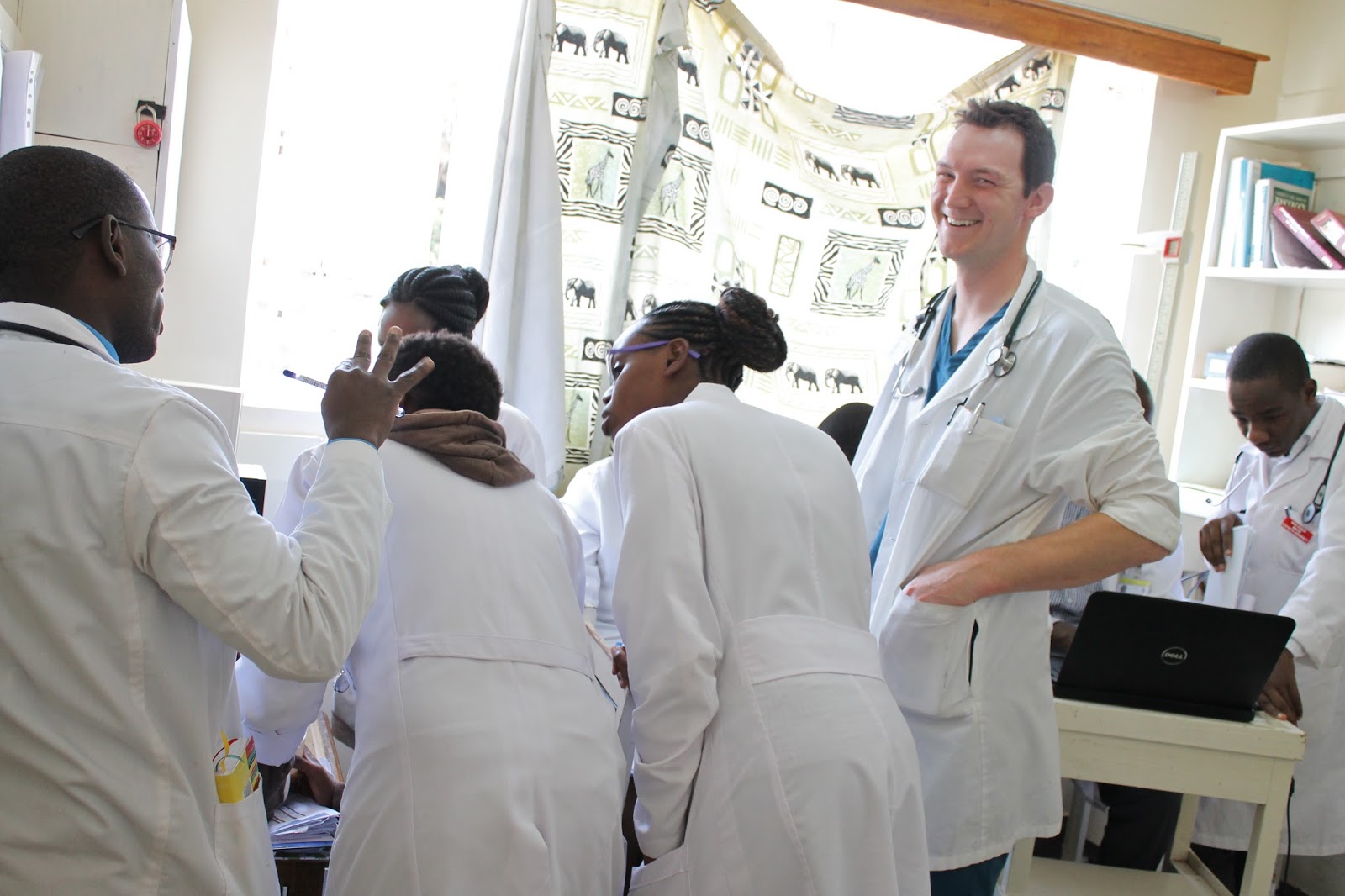
I get to work closely with each of Tenwek's Family Medicine residents.  During their first year they each rotate through my service (which is either Internal Medicine or Pediatrics, depending on the month).  Our senior residents I get to work with primarily during their Critical Care rotation as well as helping them with their research for their Masters thesis.  I also host Tenwek's weekly teaching session with all the residents. We cover things like difficult-to-understand medical topics, ethics cases, and review their educational prescriptions (weekly assignments to write about what they've been learning). We also do a Bible Study during that time. All of this is in addition to general mentoring and helping with life details (i.e. arranging logistics and housing for a rotation at a different hospital) for both our residents and interns.


What are some medical conditions that you commonly see here that you did not see in America?

HIV and HIV-related illnesses, tuberculosis, rheumatic heart disease and pesticide ingestion as a form of suicide are all extremely common.  Other things that I didn't see much of in the US but that we have plenty of here are: Guillain-Barré syndrome, malnutrition, malaria, tetanus, cholera, typhoid and numerous other forms of infectious diseases.


How big is Tenwek Hospital, and what services are offered?

Tenwek is a 300-bed hospital and serves as a referral center for the region. It handles difficult cases in Internal Medicine, Pediatrics, OB/Gyn and General Surgery. It is also well-known for its specialty surgical services such as cardiothoracic surgery, neurosurgery and urogynecolgy. Tenwek is particularly well-known for heart surgery, as an estimated 2/3 of open-heart surgeries done in sub-Saharan Africa outside of South Africa are done at Tenwek. Along with all of these difficult patients comes the need to be able to care for them medically, hence Tenwek's two intensive care units. We regularly receive referrals from other hospitals for ICU care alone. Tenwek is also known for its endoscopy department. This is largely due to the fact that the Rift Valley region which has one of the highest rates of esophageal and stomach cancer in the world. Tenwek has not only been diagnosing and treating these cancers for a long time, but has also been producing a steady stream of research on the topic.


How do you communicate with patients?

Most patients at Tenwek speak one of three languages, to varying degrees: English, Swahili, or Kipsigis. For those who speak English, no problem. Many people feel more comfortable using Swahili than English. I can ask a few simple questions, but otherwise our interns or nurses are essential for translating. There are still many patients who only speak Kipsigis, especially our older generations. The interns who speak Kipsigis are very valuable since many of our doctors come from different tribes.  We also have Maasai patients and there are even fewer people in the staff who speak Maasai.  The Maasai people are less likely to speak either English or Swahili, so anyone who can communicate clearly with them is highly valuable for translating.  Often, we find ourselves reliant on other patients in the adjacent beds to help translate. This is possible because there is a vastly different cultural understanding of patient confidentiality here than in America, so someone in the bed next to your patient often becomes a translating asset!


Give an example of a cross-cultural experience at the hospital.

One morning we were rounding in the OB ward and came to the bed of a mother who had a C-section.  She was doing well enough to be out of bed and thus was not there when we came.  Even though the mother was not there, the newborn baby was.  I looked around at the doctor team and asked, "Is there someone watching this baby?"  My Kenyan colleagues laughed and asked, "Where do you think it's going to go?  It was just born yesterday!"  Then I looked at a Western colleague who was with me and we laughed as I explained that in the U.S. there is heavy security for newborn babies at hospitals to ensure that no one who's not the correct parent walks off with a baby.  Our Kenyan colleagues were very surprised and said that no one here would be looking for extra babies!


Tell us a patient success story.

A young Muslim man in secondary school [i.e. high school] came to Tenwek and was diagnosed with Guillain-Barré Syndrome.  This is a condition in which patients develops paralysis starting in their feet and going up their entire bodies.  The most severe cases even paralyze their ability to breathe.  This particular young man was in our ICU for over three months, and in the hospital for even longer after that.  Despite many complications, he survived.  He eventually left the hospital in a wheelchair but alive and on the road to recovery.  While he was a patient at Tenwek, that young man accepted Christ.  The hospital staff also had the chance to witness to his parents during his time here.  We praise God for yet again revealing Himself through even the most tragic of situations.


Are you looking forward to taking a break from the hospital with your upcoming HMA (Home Ministry Assignment)?

It will be nice to have a break from being on the wards. There are so many tragic situations and it will be nice to step back and decompress from all of that from the past two years.


What will you miss the most about working in Kenya while you're gone on HMA?


Working with the residents has been a true joy that has allowed me to develop meaningful relationships over the past two years.  It will be difficult knowing they're continuing their education without me there.  Our most senior resident is one of my thesis advisees and he will be finishing his research and defending his thesis while I'm gone.  Three others will complete their summative exams and will move into Part Two of the program, which includes planning their Master's research/theses and starting to work alongside the consultants in running the wards and outpatient clinics.  This is a fun time of collegiality.  It will be hard knowing that all of these people that I've worked closely with and helped to meet their educational goals will need to look to other people this year for help while I'm gone.


Monday, January 22, 2018

The Story of Genesis

A couple months ago I was asked to give a devotion for a New Missionary Orientation, which was a bit ironic since I'm relatively new myself, but I was humbled and honored to do it.  The only question was, What on earth do I say to a group of new missionaries that speaks into their newness on the field while also offering some encouragement through biblical truth?

Well, I had slowly been reading through Genesis at the time, and one day I realized that all I needed to do for the devotion was tell everyone what the Lord was teaching me through it.  It was something that I, as someone who was still (and is still) trying to understand how to live and minister in this culture, needed to hear.


It was the first time I had read Genesis since being in Kenya, and many things stood out anew this time - things that I couldn't have noticed before I had any cross-cultural lenses to read the Bible with.  Basically, I was reminded of how discouraging and ugly Genesis is.  For the sake of review, here is just a sampling of what this book includes:


Adam and Eve sin against God, then Adam blames Eve who in turn blames the serpent (3:1-13)
     blamecasting

Cain attacks and kills his brother Abel out of jealousy and anger (4:8)
     → murder

Lamech marries two women (4:19)
     polygamy enters Israel's history

Noah plants a vineyard and becomes drunk with wine (9:20-21)
     drunkenness

Abram lies about his wife Sarai, saying that she is his sister, "so that I will be treated well...and my life will be spared" (12:10-13)
     subjugation of women

Hagar becomes pregnant and Sarai despises her and mistreats her (16:1-6)
     mistreatment of a servant

Lot offers his two virgin daughters to satisfy the sexual appetites of the men of Sodom (19:1-8)
     sexual exploitation

Isaac lies about his wife Rebekah, saying she is his sister, because he was afraid "the men of this place might kill me on account of Rebekah, because she is beautiful" (26:7)
     subjugation of women

Jacob deceives Isaac to obtain Esau's blessing (27:1-29)
     lying and deception

Rebekah complains that she is "disgusted with living because of these Hittite women" [i.e. her daughters-in-law] (27:46)
     strife between a mother-in-law and daughter-in-law

Jacob loves Rachel more than Leah (29:30-30:1)

     favoritism and familial strife/division

Leah and Rachel argue over mandrakes because of stress regarding fertility (30:15)
     superstition about fertility

Rachel steals her father's household gods (31:19,30-35)
     idolatry

Joseph's brothers sell him into slavery and lie about it (37:12-35)
     human trafficking

Judah sleeps with a prostitute, not realizing it was his daughter-in-law Tamar (38:15)
     →  prostitution

Joseph says, "Don't you know a man like me can find things out by divination?" (44:15)
     divination


The list could go on.  It's startling to acknowledge that THIS - all of the seriously ugly and disturbing stories in Genesis - is the beginning of Israel's history, the beginning of God's chosen people.  If I'm being honest, it's not exactly something I want to be associated with.  

What truly disturbed me as I read through Genesis this time was how much I recognized aspects of Kenyan culture in the narrative.  

Polygamy?  You betcha.  

Subjugation of women?  Don't get me started.

Prostitution?  You'd be shocked.

Superstition?  Alive and well, especially when it comes to sickness and disease.

Lying and deception?  How else is anyone supposed to get ahead in the world?

Conflict between mothers-in-law and daughters-in-law?  You tell me if you'd see any conflict when a bride is forced to essentially renounce her own family once she's married and move onto the same compound as her husband's family and be forever under the thumb of a mother-in-law who was treated with contempt herself and now sees it as her turn to do the same.


I read through Genesis, and I felt defeated.  I was disappointed as I remembered what the narrative contains, and completely crestfallen as I realized that so much of the culture around me is all too similar to the horrid accounts in Genesis.  The disappointment was acute because Kenya has been evangelized.  Kenya has more churches on corners than the Bible Belt has.  Kenya is proud of its Christian heritage.  And yet so much of Kenya is still living like Israel did in the beginning.  Why is this?

Before I answer that, let me return to the Genesis account once more.  Everything mentioned above were man's actions.  Let me review what Genesis has to say about God's actions:


After Adam and Eve sin and realize their nakedness, the Lord makes clothes for them (3:21)
     God literally clothes them

God declares a curse over Cain after he murders Abel, which Cain thinks is too harsh, so He "put a mark on Cain so that no one who found him would kill him" (4:15)
     God shows mercy to the first murderer and offers protection

The Lord establishes a covenant with Noah, promising to never again flood the earth (9:8-11)
     God makes a promise and keeps that promise

The Lord calls Abram and says, "I will make you into a great nation and I will bless you; I will make your name great, and you will be a blessing" (12:1-5)

     God initiates a relationship that precludes any of Abram's actions

The Lord protects Sarai from Pharaoh, after Abram lies about her (12:17-20)
     God protects her after what her husband had done

The Lord says to Abram in a vision, "Do not be afraid.  I am your shield, your very great reward" (15:1)
     God reassures Abram of Who He is

Lot and his two daughters are led safely out of the city of Sodom "for the Lord was merciful to them" (19:16)
       God extends mercy to them

Hagar's son Ishmael is crying in the desert after they are cast out, and God hears the boy and opens the eyes of Hagar to see a well of water, and "God was with the boy as he grew up" (21:17-20)
     God watches over Hagar and Ishmael and provided for their needs

Rachel, who was barren, finally has a child because God remembers her and listens to her (30:22-23)
     God listens and opens her womb

While Jacob and his family are in Shechem, the Lord protects them from all the towns around them (35:2-5)
     God protects them while they're traveling

When Joseph was in prison, "the Lord was with him; He showed him kindness and granted him favor in the eyes of the prison warden" (39:20-23)
     God shows kindness and protects

As Jacob considers going to Egypt to join Joseph there, the Lord speaks to him in a vision, saying, "I am God....Do not be afraid to go down to Egypt, for I will make you into a great nation there.  I will go down to Egypt with you, and I will surely bring you back again." (46:2-4)
     God reassures Jacob not to fear


The list could go on.  God is faithful and good and patient with the people of Israel as they begin to figure out the whole "we have a covenant relationship with the God of the universe" thing.  And that's just it: this was the beginning.  As Genesis shows (and as history has continued to show), it takes a lot of time for God's ways to sink in.  It often takes generation upon generation upon generation.  But God is patient with the process of letting the Gospel take root.

And that's exactly what's happening in Kenya.  Yes, Kenya has been exposed to the Gospel, but it really wasn't that long ago that missionaries first came and preached the Good News here.  In the grand scheme of things, it was basically yesterday.  The Church in Kenya is in its beginning and is still figuring out this whole "we are loved and pursued and offered salvation by the God of the universe" thing.  It can take awhile for God's ways to sink in and for a culture to be transformed by the Gospel.

But the good news is that this culture IS being transformed by the Gospel!  We know many, many Kenyans who love the Lord and who are striving to build up His Kingdom here.  We know Kenyans who are the first generation in their family to not abide by polygamy.  We know Kenyans who are teaching against superstitious beliefs in the name of Jesus.  We know Kenyans who love their wives as partners, not as property.  We know Kenyans who are helping women get out of the ring of prostitution.  Kenya is being transformed by the Gospel.


The Story of Genesis is the Story of Kenya.  It is the story of broken humanity learning that there's freedom from chains and hope for the future.  It is the story of a God who is relentless in His love at the same time that He is patient with the process of people becoming true followers of Him.

We, as missionaries on the ground, have the incredible privilege of being here during this time in the history of the Church in Kenya.  We have a front-row seat to see what God is doing here and how He's transforming this culture to understand Him better and become more like Him.  It is a blessing and a privilege to be a part of the work God is doing at this point in Kenya's story!

Furthermore, the Story of Genesis is happening all over the world right now, not just in Kenya.  Nations and cultures are being exposed to the Gospel for the first time and are beginning the long process of transformation.  We're living in just one place where this is happening, and it's exciting to think of all the places around the world where Christ is being preached, where people are being healed, and where hearts are turning from darkness to Light. 

And we already know the rest of the Story.  We already know that His Word does not go forth and come back empty.  We already know that a light has been made known to the nations.  We already know that people from every nation, tribe, and language will stand before the throne of God and praise Him.  We know the rest of the Story.  Therefore, we know there is hope for Kenya, for Africa, and for the world. 


Monday, December 25, 2017

Interruptions During the Nativity

Recently while I was homeschooling the boys I was interrupted by a woman at the door selling beet roots and cilantro.  I wasn't particularly happy to pause our lesson to answer the door for a persistent woman who wouldn't stop knocking.  And I really wasn't interested in the beet roots.  But cilantro was cause for excitement, so the interruption seemed worthwhile.  Later as I prepared lunch I was interrupted by a man at the door selling potatoes.  I didn't need them, but I'd turned the guy down the previous two times so I felt obligated to buy potatoes again.  Then the phone rang while I was putting Asa down for a nap and the caller was ignored because I wasn't willing to let the naptime routine be interrupted.  That afternoon I was interrupted by someone else at the door wanting to borrow a cup of sugar and that night we were interrupted during a rare movie night by someone calling Eli with a medical question.  Not to mention the constant interruptions from three little boys throughout the day who need noses wiped and sippy cups filled and fights broken up and band-aids applied and toys reclaimed from the black hole under the couch and so on and so on.

Sometimes our life seems to be nothing but a constant stream of daily interruptions.  And sometimes our life is barraged by bigger interruptions like my recent bout with a bacterial infection that kept me in bed for 10 days - let me tell you, it is a huge interruption when Mama is down for the count for that long!  And I must confess that I am not a fan of being interrupted.  I find myself cringing whenever there's a knock at the door from someone selling something or seeking monetary assistance.  When the kids don't leave me alone for five minutes I struggle to reign in my frustration. And recently I was begging God to heal me because the major interruption of being seriously sick meant that I couldn't do normal life and take care of my family, which was rather annoying.

I was reflecting on this a bit when the Christmas season came upon us, and as I read the Christmas story again I realized there are many interruptions throughout the narrative.


First of all, the lives of Mary and Joseph were forever changed because of the virgin birth.  Neither of them planned on the sudden influence of the Holy Spirit to ruin their original notion for a proper marriage and subsequent family life.  Nor did Mary's birth plan include hiking to Judea because of Caesar Augustus' ill-timed yet obligatory census.  I imagine these interruptions were inconvenient at best.  

Then Mary gave birth to a son, a Savior.  His arrival had been announced to a crew of shepherds in the nearby fields, but Mary and Joseph weren't aware of the impending visit from neighboring herdsmen and no doubt were ill-prepared for them all.  (I sometimes wonder if Mary was nursing the baby and quickly tucked him back into the manger because a group of shepherds suddenly appeared at her door!)  But at least this interruption was one of awe and joy.  It was an interruption that caused Mary to treasure these things and ponder them in her heart (Luke 2:19).  And presumably Mary and Joseph weren't too cranky about the unexpected visit since the shepherds left the stable praising and glorifying God (rather than stewing about disagreeable hosts).

Then, at some point the Magi appeared out of nowhere (or at least somewhere east) and proffered extravagant gifts.  Gold!  Incense!  Myrrh!  I imagine Jesus' parents were pretty happy with this interruption even if they were caught off guard by a group of strange men worshiping their child.  

But then a "big picture" interruption happened: the flight to Egypt because of Herod's death sentence against the Messiah.  No one saw that coming, but it altered their life once again.  They got up in the middle of the night and fled, not knowing how long they'd be forced to live in a foreign land.  This interruption most likely caused anxiety and fear for both the present and future.

What I had never noticed about the Christmas story before is that God the Son took on flesh in a world fraught with interruptions.  From the moment He was miraculously conceived by the Holy Spirit, Christ demonstrated yet another way that He became fully man: He assumed a life marked by regular interruptions.  Therefore, we serve a Savior who understands what it's like to receive a knock on the door at an inconvenient time.  We also serve a Savior who teaches us how to respond to the knock.


Jesus was interrupted over and over again, especially by crowds who saw and experienced His powerful teaching and miraculous healing.  When the crowds followed Him, Jesus healed diseases and drove out demons (Mark 1:32-34), taught them (Mark 2:13), healed the sick and fed them all (Matthew 14:13ff), healed the sick and fed them all again (Matthew 15:29ff), and gave sight to the blind (Matthew 20:29-34).  Although Jesus also intentionally avoided the crowds at times, He exemplified how to be patient and welcoming even at the most inconvenient times (like the time people followed Him even though His cousin had just been beheaded and He really wanted some solitude and rest).  Jesus understood the value of giving people His time and attention, even if it was at an inconvenient time, which is something our American culture does not understand well.

As we've lived in Kenya and dealt with what sometimes feels like a barrage of daily interruptions, I've been faced with the reality that it is not in my nature (or cultural makeup) to handle interruptions well.  It's humbling and frustrating to realize this about myself, especially when I want to value people and relationships more than tasks or time.  But as I look to Jesus, who was born into a life of interruptions and who exemplified throughout His life how to handle them, I am being challenged to face my instinctual response to the plethora of interruptions that happen here and to find a better response: to open the door with love, to let God lead our every step (whether in our daily routine or on the days we're crossing borders), and to find what joy can be had in whatever interrupts us.

Sunday, December 10, 2017

When Sickness Strikes in Africa

The day before Thanksgiving, while we were traveling, I became sick.  I spent the next ten days in bed, fighting off an unknown infection that would not be defeated by my immune system alone.  It was the most sick I've ever been, but this arduous experience increased the conviction of our calling to bring healing to the poor in Kenya.

It started right after breakfast with a headache and overall weakness.  I laid down before our lunch engagement, barely made it through lunch, then went right back to bed for the rest of the day as chills overtook me.  By the next morning I was still weak and not feeling well, but by God's grace I survived the two-hour drive to Eldoret where we stayed the night.  I had skipped breakfast and lunch and went straight to bed again as soon as we arrived at the guesthouse.  Eli and the boys enjoyed a delicious Thanksgiving meal with the guesthouse owners while I laid in bed with chills and stomach pain, moaning and groaning my way through the afternoon.

Diarrhea arrived during the night, which was a most unwelcome guest.  Diarrhea + traveling + not being in your own home = discomfort at best.  I was miserable with intense stomach pain and the inability to sleep well.  In the morning I told Eli that I couldn't make the 4-hour drive back to Tenwek without medication in my system, so he made a trip to the chemist (aka pharmacist) to find some meds, which he thankfully procured and brought back to me before things got even worse.  My husband, God bless him, took care of the kids and all the packing while I laid on the couch trying to recoup some lost sleep.

We stopped once for the boys to get something to eat, and I tried a lemonade which I couldn't finish, so I simply headed back to the car to curl up in the front seat and wait for the remainder of the trip to Tenwek.  By the grace of God alone we made it all the way back without any incidents in the car, and the minute we pulled up to our house I had to dash inside to the bathroom.  I'm telling you, it was the grace of God alone that got us home that day!

I was unable to attend our Tenwek Thanksgiving celebration the next day, which was a particular disappointment since I had planned the entire day's festivities for nearly 100 people.  I later heard that the food and fellowship were amazing, which I thank God for, but was incredibly discouraged to have laid in bed all day while everyone else enjoyed the specially-ordered turkey and the traditional all-pie dessert.

By Day 5 I thought I was turning a corner because I was able to sit up and eat a bit.  I slept through the night and thought better days were ahead.  But by mid-morning the pain and exhaustion were back, as well as the fever, and it quickly became obvious that the mystery infection would not go down without a fight.  On Day 7 it was decided that I needed IV fluids to combat the severe dehydration caused by so much diarrhea.  One of the privileges of being a missionary at a mission hospital is that my community consists of doctors galore and insider contacts to everyone and everything at the hospital.  So a friend of mine rallied the troops and brought one of the best nurses in the hospital down to my house to get me started on an IV drip.  Over the course of the two days that I was on IV fluids there were multiple doctors making house calls to check on me and help with treatment, and I felt blessed and spoiled to be sick in such a place as this.


Caleb was very curious about what was going on 
and became determined to help take care of Mama too!


I was so dehydrated that the nurse couldn't get a blood sample, so I was pumped with fluid for a day before trying to get a blood sample the next day.  Thankfully it worked the second time around and we were able to send samples to the lab.  Unfortunately, no one was able to identify the infection, but it was determined that it was bacterial (not viral), and it was not malaria.  Our current best guess is that I had typhoid.


After starting a round of antibiotics, which made me vomit a couple times but which ultimately kicked my immune system in gear, I started to turn a corner.  I stayed in bed for several more days, and on Day 10 I was able to get up and hobble around the house and even eat something.  I basically hadn't eaten for a week, which left me tired and weak, so regaining my appetite and beginning to put food in my stomach was a huge victory.

And slowly, slowly, I started to recover.  It's not easy on anyone when Mama is out of commission for so long, but my beloved husband was Super Dad and Super Husband the entire time.  He rose to the challenge and took care of the boys and took care of me and cooked meals and did laundry and worked tirelessly to keep everything in working order while I laid in bed for over a week.  And we were so loved and supported by the missionary community as well.  People watched our kids, covered Eli at the hospital so he could be home with us, brought us meals, came to pray with me, sent encouraging notes and posted Scripture on our door.  We couldn't have survived without all the help and love and support from our community!

In the midst of it all, I couldn't help but wonder how countless people throughout Kenya who suffer similar sicknesses are able to manage without access to healthcare.  I think that often they don't manage and suffer continually.  My infection, whatever it was, was not something that could run its course and eventually I would just get better.  I needed antibiotics and IV fluids to heal and recover.  And I thought about all the people who don't have easy access to healthcare like I did.  I thought about those who suffer for days, lying in bed unable to function as they hope and assume their illness will eventually pass but instead they continue to suffer while the infection rages on.  My heart aches for those who are faced with the reality of chronic illness or even death because they don't have access to the resources or opportunities for an alternative.  And now I feel an even stronger conviction to continue the work we are doing: providing the healing ministry of Jesus to countless people who would have no access to healthcare otherwise.

While I laid in bed I was reminded of the life-changing words we heard a Fulani woman say in Cameroon.  We were helping administer vaccines to a group of women and children in the bush, and one woman said, "Since you've been coming, our children don't get sick anymore."  Her words have impacted us ever since, and we come back to them whenever we're discouraged or feel too exhausted to go on.  What these people need, all over the world, are people willing to come and offer healthcare - to bring themselves and medical knowledge and medicine and compassion in Jesus' name.  And that is what we're trying to do.  And after suffering this mystery infection for so long and knowing I defeated it because I have access to healthcare, I feel even stronger about this call on our life.

When John the Baptist sent his disciples to ask Jesus if He was the Messiah, Jesus was in the middle of curing many who had diseases, sicknesses and evil spirits, and giving sight to the blind (Luke 7:18-21).  When John's disciples reached Him and asked if He was the Messiah, this is what Jesus said: "Go back and report to John what you have seen and heard: The blind receive sight, the lame walk, those who have leprosy are cured, the deaf hear, the dead are raised, and the good news is preached to the poor" (7:22).  In other words, the healing ministry of Jesus was a sign that He was the Messiah, and to participate in the ministry of healing is to participate in the work of the Messiah.

So I am on the mend, still taking it slow but able to get around and do some of our normal routine.  And I am thankful for the chance to be here doing the work God has called us to.  I am thankful for a husband who's willing to face the sickness and suffering of so many people at the hospital every day, and who's willing to do what he can to offer hope and healing to those who suffer from all the Oregon Trail diseases and more which are still alive and well in the developing world.  It's not an easy thing to do, but it's what we can do to represent Jesus and all He has to offer to this sick and dying world.


I have notoriously small veins and had to be pricked several
times on my wrists and arm for the IVs and blood draws. 
These bruises were several days old. 
Battle wounds in the healing process!